To prevent mold on drywall in a humid climate, keep indoor relative humidity between 30 and 50 percent, run exhaust fans in bathrooms and kitchens, fix leaks right away, and dry any wet drywall within 24 to 48 hours. In rooms that stay damp, install mold-resistant board such as purple board or paperless drywall. Steady airflow and fast action stop spores before they spread.
Mold needs three things to grow: spores, moisture, and food. Spores float in almost every home, and the paper facing on standard drywall gives them an easy meal. Humid air supplies the last ingredient, which is why walls in damp regions get hit so often.
South Louisiana sits at the top of that risk list. The team at TurnKey Sheetrock installs and repairs drywall across New Orleans and the surrounding parishes, and moisture damage drives a large share of those calls. The good news is that mold on drywall is preventable with a few consistent habits.
This guide covers why local walls are so vulnerable, how to control indoor humidity, which materials fight mold on their own, and what to do if you already see spots forming.
New Orleans is the most humid major city in the United States, with average relative humidity near 86 percent. The city sits below sea level between the Mississippi River and Lake Pontchartrain, so damp air has nowhere to go. Walls here face moisture pressure all twelve months of the year.
Standard drywall soaks up that moisture like a sponge. Once the gypsum core and paper facing stay damp, spores can germinate in as little as 24 to 48 hours. That short window is why quick drying matters more than any cleaning product.
History proved the point on a massive scale. Roughly 80 percent of New Orleans flooded after Hurricane Katrina in 2005, and mold overtook wet wallboard in soaked homes within days. Everyday humidity works slower than a flood, but it feeds the same process.

The EPA recommends keeping indoor relative humidity below 60 percent, and ideally between 30 and 50 percent. Relative humidity measures how much water vapor the air holds compared to its maximum capacity. Above 60 percent, drywall surfaces absorb enough moisture for spores to take hold.
You cannot manage what you do not measure. A digital hygrometer costs little and shows your levels at a glance. Place one in the bathroom, the bedroom, and any room that smells musty.
Here is how to hold the 30 to 50 percent range in a Gulf Coast home:
Humidity control also protects tape joints, paint, and texture from slow damage. For more habits that extend wall life, see our guide on maintaining your drywall for longevity and durability.
Ventilation moves damp air out before it settles into your drywall. Bathrooms are the biggest offenders, since one hot shower can push a small room past 90 percent relative humidity. Run the exhaust fan during every shower and leave it on for 20 to 30 minutes afterward.
Kitchens and laundry rooms need the same attention. Use the range hood while boiling water or cooking, and confirm your dryer vents outside rather than into a wall cavity or attic. A dryer that vents indoors dumps gallons of water vapor into your home every week.
Airflow between rooms matters too. Leave a gap between furniture and exterior walls, and open closet doors now and then so trapped air can circulate. Simple routines like these pair well with the steps in our post on how to maintain drywall in your home.

Not all wallboard handles humidity the same way. Greenboard is moisture-resistant drywall with a treated paper face, and it suits kitchens and half baths. It slows water absorption, but its paper facing can still feed mold if it stays wet.
Purple board goes a step further with a core and facing engineered to resist both moisture and mold growth. Paperless drywall removes the food source entirely by replacing paper with fiberglass mats. Both options make sense for full bathrooms, laundry rooms, and ground-floor walls in flood-prone neighborhoods.
Exterior walls deserve protection too. Moisture-resistant gypsum sheathing behind siding or brick blocks humidity before it ever reaches interior board. If you are planning new walls, start with our checklist on how to prepare a wall for drywall installation so the surface behind the board stays dry from day one.
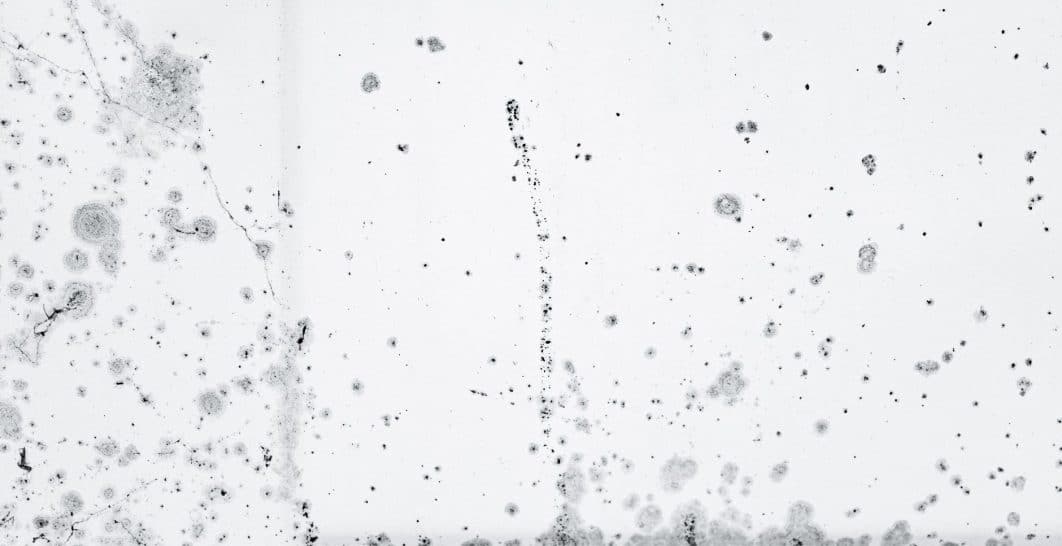
Early mold rarely looks dramatic. Watch for small black, green, or brown specks near baseboards, ceiling corners, window frames, and behind furniture on exterior walls. A persistent musty smell often shows up before anything visible does.
Touch and texture give clues as well. Paint that bubbles, tape seams that lift, or a wall that feels soft or damp all point to moisture inside the board. Yellow or brown water stains mean a leak is feeding the wall, even if mold has not surfaced yet.
Check hidden zones twice a year, especially under sinks, around tubs, and inside closets on outside walls. Several of these warning signs overlap with general wall damage, and our drywall repair signs guide explains how to tell them apart.
First, find and stop the moisture source. Cleaning mold without fixing the leak or humidity problem only buys a few weeks. Shut off water to a leaking line, seal the gap, or bring humidity down before touching the wall.
Small surface patches on painted drywall can be cleaned with detergent and water while wearing gloves and an N95 mask. The EPA advises calling a professional when mold covers more than about 10 square feet. Skip the bleach-soaking approach, since drenching drywall adds the very moisture mold needs.
Drywall that is soft, crumbling, or moldy through the surface cannot be saved. The affected section needs to be cut out, the cavity dried, and new board hung and finished. Professional drywall repair restores the wall with mold-resistant materials so the same spot does not fail twice. TurnKey Sheetrock handles this work across the metro area, from Metairie and Kenner to Slidell, Covington, and Baton Rouge.
Keep indoor relative humidity between 30 and 50 percent, per EPA guidance, and never let it sit above 60 percent. At that range, drywall surfaces stay too dry for spores to germinate. A basic hygrometer lets you check levels daily.
Mold can begin growing on wet drywall within 24 to 48 hours. That is why the EPA urges homeowners to dry water-damaged materials inside that window. Fans, dehumidifiers, and open airflow speed the process.
No, mold-resistant drywall resists growth but does not make a wall mold-proof. Purple board and paperless drywall remove the paper food source, yet heavy or repeated water exposure can still cause problems. Humidity control and leak repair remain necessary.
No, paint only hides mold and the growth continues underneath. The colony will bubble or bleed through the new coat within months. Clean small patches or replace damaged board first, then repaint once the wall is dry.
Replace drywall when mold covers more than about 10 square feet, when the board feels soft, or when growth returns after cleaning. Mold rooted in the gypsum core cannot be scrubbed out. Cutting back to clean, dry board is the only lasting fix.
Greenboard works for half baths and low-splash areas, but a full bathroom in a humid city deserves purple board or paperless drywall. Showers themselves need cement board or another tile backer, not drywall. The upgrade cost is small compared to a mold repair.
Worried about damp walls or a musty smell in your home? Reach out through our contact page or call (504) 285-7483 for straight answers on mold-resistant drywall, repairs, and moisture-smart installation anywhere in the New Orleans area.


 TurnKey Sheetrock