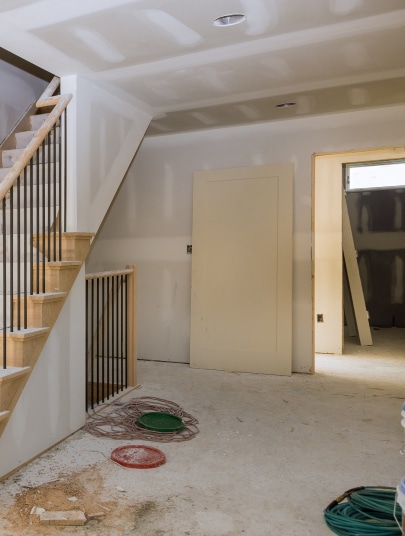
The main drywall texture types are smooth finish, orange peel, knockdown, skip trowel, slap brush, sand swirl, and popcorn. Smooth walls and light spray textures like orange peel and knockdown are the most popular choices in homes today. Popcorn has fallen out of favor and is usually removed during remodels.
Wall texture is one of the last steps in a drywall job, but it shapes how every room looks. The right finish hides small flaws and softens light. The wrong one can make a house feel dated the day you move in.
This guide walks through the most common drywall texture types and where each one works best. It draws on the field experience of TurnKey Sheetrock, a residential and commercial drywall contractor whose crews have sprayed, troweled, and repaired every finish on this list.
Use it to pick a finish for new construction, or to figure out what is already on your walls before a remodel or repair.
Drywall textures fall into two groups. Sprayed textures, such as orange peel, knockdown, and popcorn, are applied with a hopper gun that blows thinned joint compound onto the surface. Hand-applied textures, such as skip trowel, slap brush, and sand swirl, are worked in with a trowel or brush.
The material behind almost every pattern is joint compound, which crews call mud. Manufacturers like USG also sell bagged texture products made for spray rigs. Either way, the surface must be taped, sanded, and primed before texture goes on, and our post on how to prepare a wall for drywall installation shows what solid prep looks like.
One quick note on terms. Texture is not the same as drywall finishing Levels 0 through 5, which describe how joints and fasteners are coated before any decorative surface is applied. You can see how finish work fits into a full project on our drywall finishes service page.

Smooth finish means no texture at all. Designers have pushed this look for two decades because it reads clean and modern, and it photographs well. It has become the standard in most high-end new construction.
Smooth walls demand the most skill. Every joint and screw head must disappear, because paint and daylight expose any ridge or hollow. Glossy paint and low-angle light are especially unforgiving.
Flat surfaces also show scuffs and dings more than textured ones do. They are easy to clean and easy to patch, but they need regular touch-ups in busy households. Our post on how to maintain drywall in your home covers simple habits that keep flat walls looking new.
Orange peel is the most common sprayed texture in American homes. A crew thins joint compound with water, loads it into a hopper gun, and sprays a fine splatter across the wall. Once dry, the surface has small, soft bumps like the skin of citrus fruit.
Builders like orange peel because it goes on fast and hides minor flaws in the finish coat. It is durable, easy to wipe down, and simpler to touch up than hand-applied patterns. That is why it shows up so often in bedrooms, hallways, rentals, and offices. Satin and semi-gloss paints hold up well over it, which makes kitchens and bathrooms easy to keep clean.
Spray pressure and mud thickness change the result. A fine mist gives a subtle stipple, while a heavier mix leaves larger droplets. Careful applicators test the pattern on scrap board before spraying a room.

Knockdown starts out like orange peel. The crew sprays a heavy splatter, lets it set for several minutes, then drags a wide knockdown knife across the peaks. Flattening the high spots leaves a mottled, low-profile pattern with more character than orange peel. Timing matters here. Knock the splatter down too early and it smears, too late and the knife tears it.
Skip trowel is the hand-applied cousin. A finisher spreads mud with a curved trowel held at a slight angle, so the blade skips across the surface and leaves thin, random patches. The look is similar to knockdown but more organic, and it is common in Mediterranean and Southwestern style homes.
Both patterns hide wall damage well, yet both are hard to match by eye. If a patch stands out after a repair, the texture blend is usually the problem. Our drywall repair signs guide explains what to look for before small damage spreads.
Slap brush goes by many names, including stomp brush and crow’s foot. A finisher rolls thinned mud onto the surface, then presses a stiff bristle brush into it and pulls away. Each stomp leaves a fan of ridges, and overlapping stomps build a bold, random pattern. Depth varies with the brush and the angle of each press, so no two jobs look exactly alike.
Sand swirl blends fine sand into primer or thinned joint compound. The finisher then sweeps a brush through the wet mix in rows of overlapping arcs. The effect is dramatic, so most homeowners reserve it for ceilings, hallways, or a single accent wall.
Ceilings carry these patterns especially well, since no one touches them and light rakes across them. Decorative overhead work goes beyond texture, too. Tray, coffered, and other built designs are covered on our custom ceiling service page.
Popcorn, also called acoustic texture, was sprayed onto millions of ceilings from the 1950s through the 1980s. It hid flaws, muffled sound, and never needed sanding, which made it cheap to install. Tastes changed, and today it is the texture buyers most often ask to remove.
There is a safety issue as well. Many popcorn products contained asbestos, and the Clean Air Act restricted spray-applied asbestos materials in 1978. Existing stock stayed in use for years, so ceilings installed into the mid-1980s can still contain it. Always have an older ceiling tested before scraping it.
Removal is messy but routine for a drywall crew. Most homeowners replace popcorn with a smooth or knockdown ceiling, then repaint. Once the new finish is up, a few habits protect the investment, and our tips on maintaining your drywall for longevity and durability cover the basics.
Still torn between finishes? Ask for sample boards. A good crew can spray or trowel each option on scrap drywall so you can view it under your own lighting before committing to a whole room.
Orange peel is the most widely used texture in American homes, while smooth finish leads in newer high-end construction. Knockdown runs a close second in many regions. Preferences vary by area, so look at recent builds near you for a local baseline.
Heavier textures such as knockdown, skip trowel, and slap brush hide imperfections best. Their raised, random patterns break up light and disguise seams, patches, and slight waves in the wall. Smooth finish hides the least.
Some do. Popcorn texture applied before the mid-1980s may contain asbestos, since products made before the 1978 restriction stayed in circulation for years. Have a sample lab-tested before scraping or sanding an older ceiling.
Yes, an experienced finisher can match most textures. They identify the original method, then adjust mud thickness, spray pressure, and tools until a test patch blends in. Orange peel and knockdown are the easiest to match.
Yes, as long as the paint is clean, dull, and sound. Glossy surfaces need scuffing or a bonding primer first so the joint compound grips. Any loose paint or damage should be repaired before texture goes on.
Usually, yes. Smooth walls require a higher standard of taping and sanding, which adds labor hours. Texture can cover small finishing flaws, so it often takes less time to reach a result that looks right.
Ready to choose a finish for your walls or ceilings? If your project is in New Orleans or the surrounding communities, contact TurnKey Sheetrock or call (504) 285-7483 for an honest assessment and a clear quote.

 TurnKey Sheetrock