



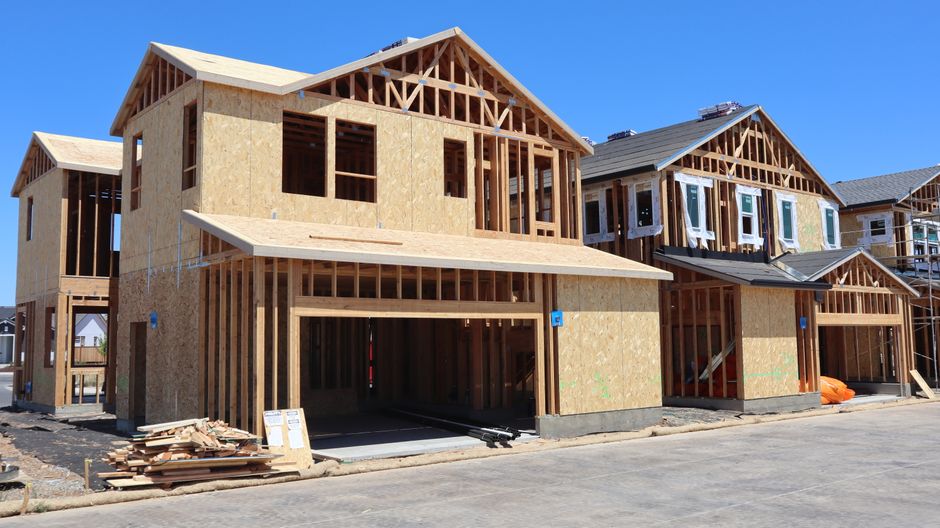
A drywall crew hanging board in a brand-new, framed-but-empty house and a crew hanging board in an occupied, half-torn-apart renovation are doing the same trade with two completely different jobs. New construction moves fast because the space is open and predictable. Renovation moves slower because the crew has to protect furniture, contain dust, and match whatever texture is already on the walls.
If you’re planning a project in the greater New Orleans area and comparing quotes, understanding this split explains why two “drywall jobs” can come in at very different price points and timelines even when the square footage looks similar on paper.
New Construction Starts With a Blank Canvas
In new construction, drywall goes up in an empty, fully framed shell with no furniture, no finished flooring, and no existing walls to match, which lets crews hang full-size sheets in long, efficient runs with minimal cutting and almost no protective staging. Once the framing inspection is signed off, the space is essentially a blank box. Crews can bring in full 4×8 or 4×12 sheets, stand them up against open studs, and screw them off without working around anyone’s belongings or worrying about tracking dust into a living room.
This is also where the work is most predictable. The framing was built to standard on-center spacing, so board sizes and cut lists are known in advance. There’s no plumbing hidden behind a wall from 1962 to discover mid-cut, no forgotten electrical run to dodge, and no surprise water damage behind the surface. Panels are staged, hung, taped, and finished in a straight sequence, which is a big part of why new-build drywall installation generally moves faster per square foot than remodel work.
Renovation Means Working Around a Home That’s Still in Use

Renovation drywall work happens inside a space that already has walls, floors, and often people living in it, which means every step (from demo to hanging to finishing) has to protect what’s already there while accounting for what the old walls hid. According to industry cost data reviewed in 2026, occupied-home and renovation drywall projects can run 20-40% higher than a standard new-build installation of the same size, largely because of dust containment, staged access, and unpredictable conditions behind the existing wall (source).
Opening up an older wall in a New Orleans-area home can reveal non-standard stud spacing, plumbing lines that weren’t where the plans said, or framing that’s slightly out of plumb after decades of settling. None of that shows up until demo starts, which is why a renovation quote often includes more contingency than a new-build quote for the identical square footage.
Dust Containment Is a Full Job by Itself in an Occupied Home
Protecting a lived-in space from drywall dust and debris requires plastic sheeting over doorways, floor protection, sealed HVAC returns, and sometimes negative air pressure setups, all of which take real setup and breakdown time that a new-build job never needs. In new construction, dust simply isn’t a concern because there’s no finished flooring or furniture to protect and no family breathing the same air down the hall. In a renovation, that containment work happens before a single sheet goes up and gets torn down again once the room is clean, adding labor hours that don’t show up on a per-sheet basis but absolutely show up on the invoice.
This is one reason a single bathroom remodel or kitchen renovation can carry a higher effective cost per square foot than an entire new-build room addition using the same drywall repair or patching techniques.
Matching Existing Texture Is the Renovation Problem New Construction Never Faces

When new drywall meets an existing wall or ceiling in a renovation, the seam has to disappear into whatever texture and paint sheen is already there, whether that’s a smooth Level 5 finish, a decades-old knockdown pattern, or a swirl texture nobody makes anymore. New construction never deals with this because every wall in the house gets the same finish at the same time. In a renovation, a patch that’s finished smooth next to an existing knockdown texture will stand out immediately once paint goes on, no matter how clean the taping job was underneath.
This texture-matching step is often the single biggest factor in why a renovation drywall job takes longer than a comparable new-build job, and it’s a large part of why experienced crews sample-match texture before committing to a full room.
Scheduling Flexibility Runs in Opposite Directions
New-build drywall scheduling is driven by the broader construction timeline and inspections, while renovation scheduling is driven by the homeowner’s daily life, meaning access windows, noise tolerance, and room-by-room sequencing that a new-build crew never has to plan around. On a new construction site, the drywall crew works on the general contractor’s schedule alongside electricians, plumbers, and framers, moving room to room as inspections clear.
On a renovation, especially one in an occupied home, the schedule often has to bend around when the homeowner can be out of the house, when a single bathroom needs to be back in service, or when a family with young kids needs quiet hours. That staggered, room-by-room access is slower by design, and it’s a normal part of working in a home that’s still being lived in rather than one still under construction.
Why Does This Distinction Matter for Getting an Accurate Quote?
Asking whether a quote covers new-build conditions or renovation conditions is one of the fastest ways to understand why two drywall estimates for the same square footage can differ significantly, since containment, texture matching, and staged access all add labor that a blank-canvas new-build job never needs. A contractor pricing a renovation without accounting for these factors is either underbidding the job or planning to cut corners on containment and texture matching, both of which show up as problems after the crew leaves.
Homeowners and business owners across Metairie, Kenner, Slidell, Mandeville, Baton Rouge, and the surrounding areas are usually best served by getting a clear answer on which category their project falls into before comparing bids line by line.
Frequently Asked Questions
Is renovation drywall always more expensive than new construction drywall?
In most cases, yes, per square foot. Renovation work adds dust containment, staged access, texture matching, and the possibility of hidden framing or plumbing issues behind existing walls, none of which apply to an open new-build space.
Can a room addition be treated like new construction even though the rest of the house is older?
The addition itself often installs like new construction since it’s framed fresh, but the seam where it meets the existing house still needs renovation-style texture matching, so the project usually blends both processes.
How much longer does a renovation drywall job take compared to new construction?
Timelines vary by project scope, but containment setup, texture sampling, and working around occupied living space typically add real time that a new-build job in an empty shell doesn’t require.
What hidden issues commonly show up during renovation demo that don’t exist in new construction?
Non-standard stud spacing, out-of-plumb framing from decades of settling, and plumbing or wiring runs that don’t match the original plans are all common discoveries once an existing wall is opened up.
Does a commercial tenant build-out count as new construction or renovation?
It depends on the space. A build-out inside a bare shell behaves like new construction, while a build-out inside a previously occupied unit with existing walls behaves like a renovation, texture matching and all.
Should I get separate quotes for the new-build and renovation portions of a mixed project?
It’s worth asking your contractor to break out pricing by area so you can see how much of the cost difference comes from containment and texture matching versus straightforward new-build hanging and finishing.
Ready to Talk Through Your Project?
Get a Clear Scope for Your New-Build or Renovation Drywall Project
Whether your project is framed and ready to go or you’re working inside a home that’s still in use, TurnKey Sheetrock can walk through what your specific job requires before any board goes up.
Call (504) 285-7483 or reach out through our Contact page to get started.