



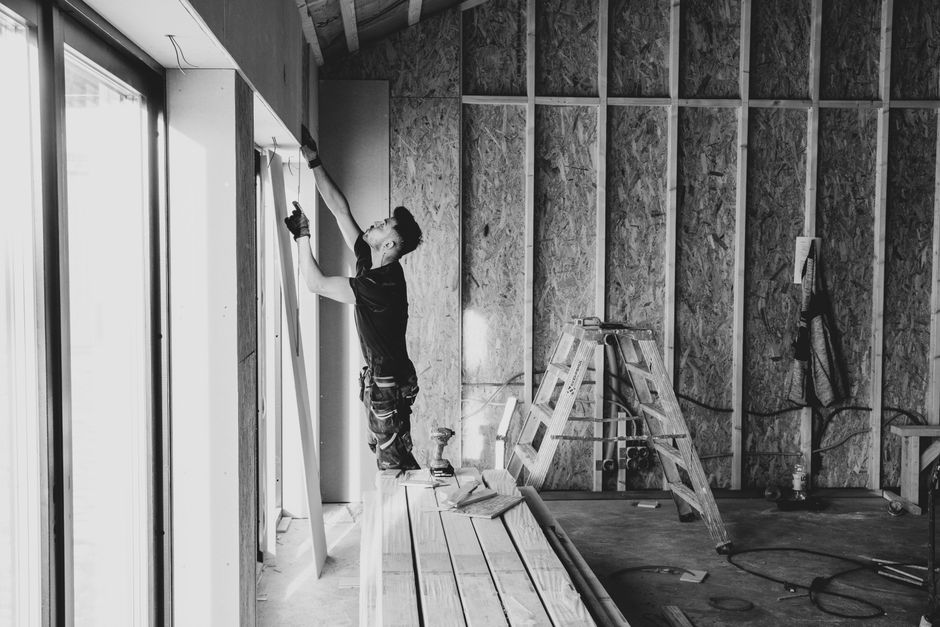
Ask any drywall crew where a job is most likely to crack first, and they’ll point to the corners of a window or door. Every inside and outside corner around an opening concentrates structural stress in a small area, which is why these spots need backing, corner bead, and careful taping that flat wall sections don’t require. Get it right and the opening reads as a clean, straight line. Get it wrong and hairline cracks show up within a year or two, right where they’re hardest to hide.
Why Do These Corners Crack First?
Cracks at window and door corners happen because the framing around an opening flexes more than a solid wall section, and that movement travels straight into the taped joint if the corner isn’t properly reinforced. A window or door opening interrupts the stud pattern, so the header and the trimmer studs around it carry more load and shift slightly with the building’s normal seasonal movement. If that corner was taped like a flat section of wall instead of reinforced like a stress point, the joint compound has nowhere to absorb that movement and it cracks.
Builder-grade framing crews sometimes skip backing blocks at the corner returns to save time, leaving unsupported drywall right at the point where stress is highest. It holds up fine on day one. The problem shows up eight months later, right at the corner, right where a client’s eye lands first when they walk in the room.
Corner Bead and Backing Do the Real Work
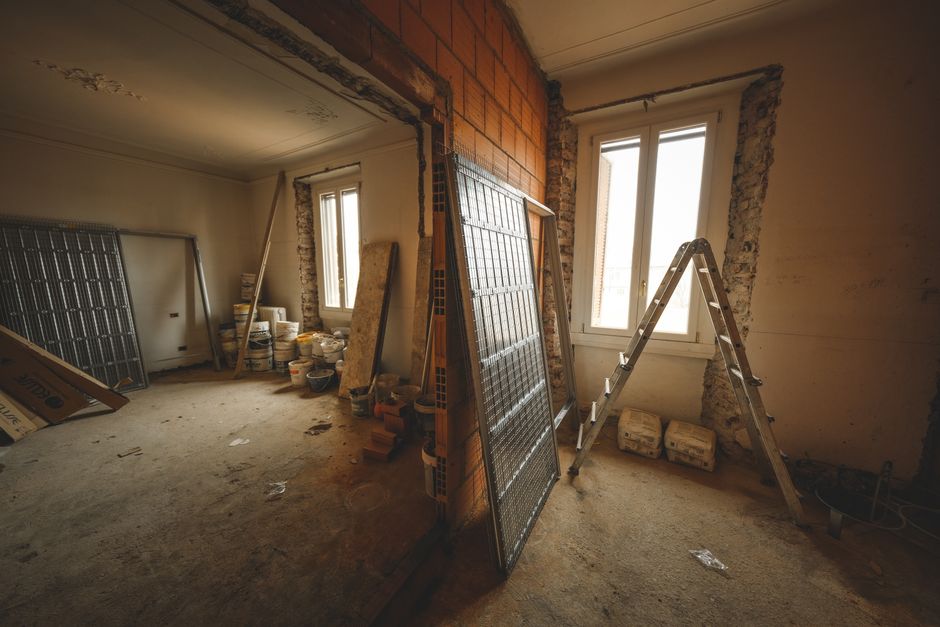
Solid backing at every window and door corner return, paired with correctly installed corner bead, is what actually keeps these joints from cracking, not the paint job on top of it. Corner bead needs to be nailed or crimped tight against a solid backing block, not floating on drywall edges alone. On outside corners especially, a loose bead flexes with any bump or pressure, and that flex telegraphs straight through the compound over time.
Compound application matters just as much as the bead itself. Thin coats that are allowed to dry fully between passes shrink less and hold up better than one thick coat rushed to save a return trip. That’s a bigger deal in a humid climate like New Orleans, where compound that looks dry on the surface can still be curing underneath. Rushing that step is one of the most common reasons a corner looks fine at final walkthrough and cracks a season later.
Paper Tape vs. Mesh Tape at Stress Points
Paper tape generally holds up better than mesh tape at window and door corners because it has less stretch, which matters most exactly where the wall is under the most movement. Mesh tape is faster to apply and works fine on flat field joints, but it’s more forgiving of movement in a way that isn’t always a good thing. It can flex slightly with the wall rather than resisting it, which is the opposite of what’s needed at a stress point. Many experienced finishers reserve paper tape specifically for corners and openings for this reason, even on jobs where mesh gets used elsewhere.
Getting the Jamb and Reveal Right
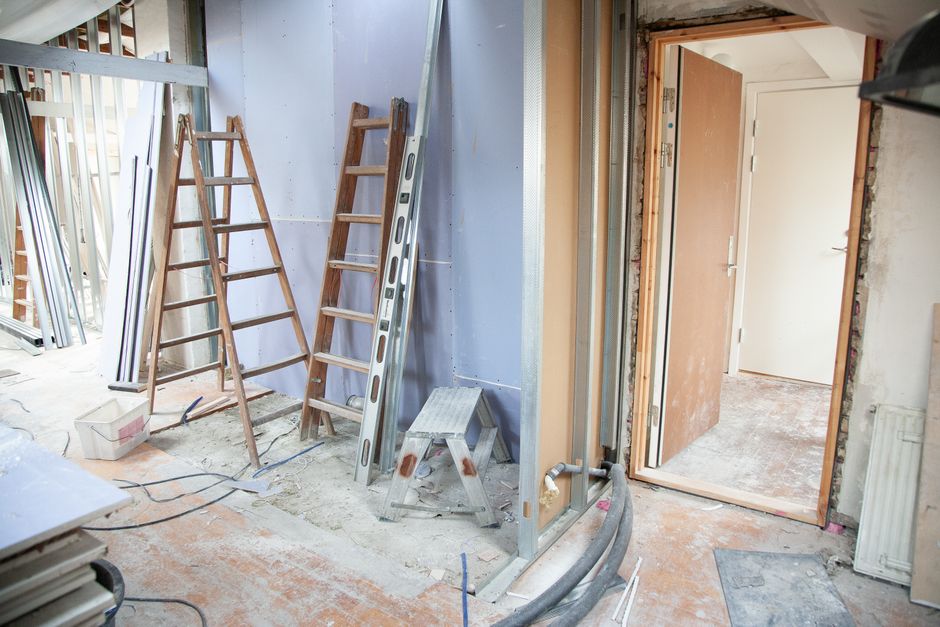
A jamb extension bridges the gap between a window or door frame and the finished face of the drywall, and getting its width and reveal correct is what separates a professional-looking opening from one that looks slightly off. Exterior walls framed with modern stud depths and finished with drywall often leave two to three inches of exposed rough framing between the window unit and the wall surface. That gap needs a built-out jamb extension, not just drywall wrapped awkwardly around it. Standard practice sets the extension with a small reveal, typically an eighth to a quarter inch, so the casing sits with a consistent shadow line all the way around instead of butting flush and looking pinched.
This step gets skipped or rushed more often on renovation work, where an existing opening is being reworked around a new window or door. Matching the reveal on all four sides takes more care than a new-construction opening built to spec from the start, but it’s the difference between trim that looks intentional and trim that looks patched.
What Does a Clean Opening Actually Look Like?
A properly finished window or door opening has straight, sharp corner lines, no visible seams or ripples under raking light, and a consistent reveal where the trim meets the wall on all sides. Run a hand along the corner bead and it should feel flush, not proud or recessed. Stand at an angle under a light source and the field around the opening should show no shadowing from ridges or dips in the compound. These are the details that separate a $200 patch job from a wall built to hold up for the life of the house.
For openings in commercial spaces or fire-rated assemblies, the corner detailing has to meet the same finish standard while still preserving the rated wall system, which is a different set of constraints than a standard residential opening. That work benefits from a crew that installs both residential and commercial drywall regularly rather than one or the other.
Frequently Asked Questions
Why do cracks always seem to come back at the same corner even after they’re patched?
Patching the visible crack without addressing the backing or the framing movement behind it only hides the symptom. If the corner still lacks solid backing or the framing is still shifting seasonally, the same crack reopens in the same spot, usually within a year.
Is mesh tape ever acceptable at a window or door corner?
It can work on lower-stress interior partition openings, but most finishers avoid it at exterior window and door corners where movement is greatest, favoring paper tape instead for its lower stretch.
How much of a reveal should there be between drywall and window or door trim?
An eighth to a quarter inch is standard. It gives the casing a clean shadow line and some tolerance for minor irregularities in the framing or the drywall edge.
Can this kind of corner cracking be fixed without redoing the whole wall?
Usually yes. A proper fix removes the old compound and tape at the corner, adds backing if it’s missing, re-tapes with the right material, and reapplies compound in thin coats. It doesn’t require replacing the drywall sheet itself in most cases.
Does New Orleans humidity make these corners more likely to crack?
It can. Humidity swings affect drying time and can contribute to wood movement in framing, both of which put more stress on corner joints than they’d see in a drier, more stable climate.
Should jamb extensions be installed before or after the drywall is hung?
The rough opening and framing depth are typically confirmed before drywall goes up, but the jamb extension itself is usually built and installed after the drywall is finished, so it can be sized and shimmed to the actual finished opening.
Get a Clean Finish Around Every Opening
Cracked corners and sloppy reveals around windows and doors are one of the fastest ways a good drywall job starts looking bad. TurnKey Sheetrock handles the framing, taping, and finish work around every opening, residential and commercial, throughout New Orleans and the surrounding area, including Baton Rouge, Covington, Gretna, Hammond, Harahan, Kenner, LaPlace, Madisonville, Mandeville, Metairie, River Ridge, Slidell, and St. Rose.
Call (504) 285-7483 or request a free estimate to get your next project framed and finished right.